

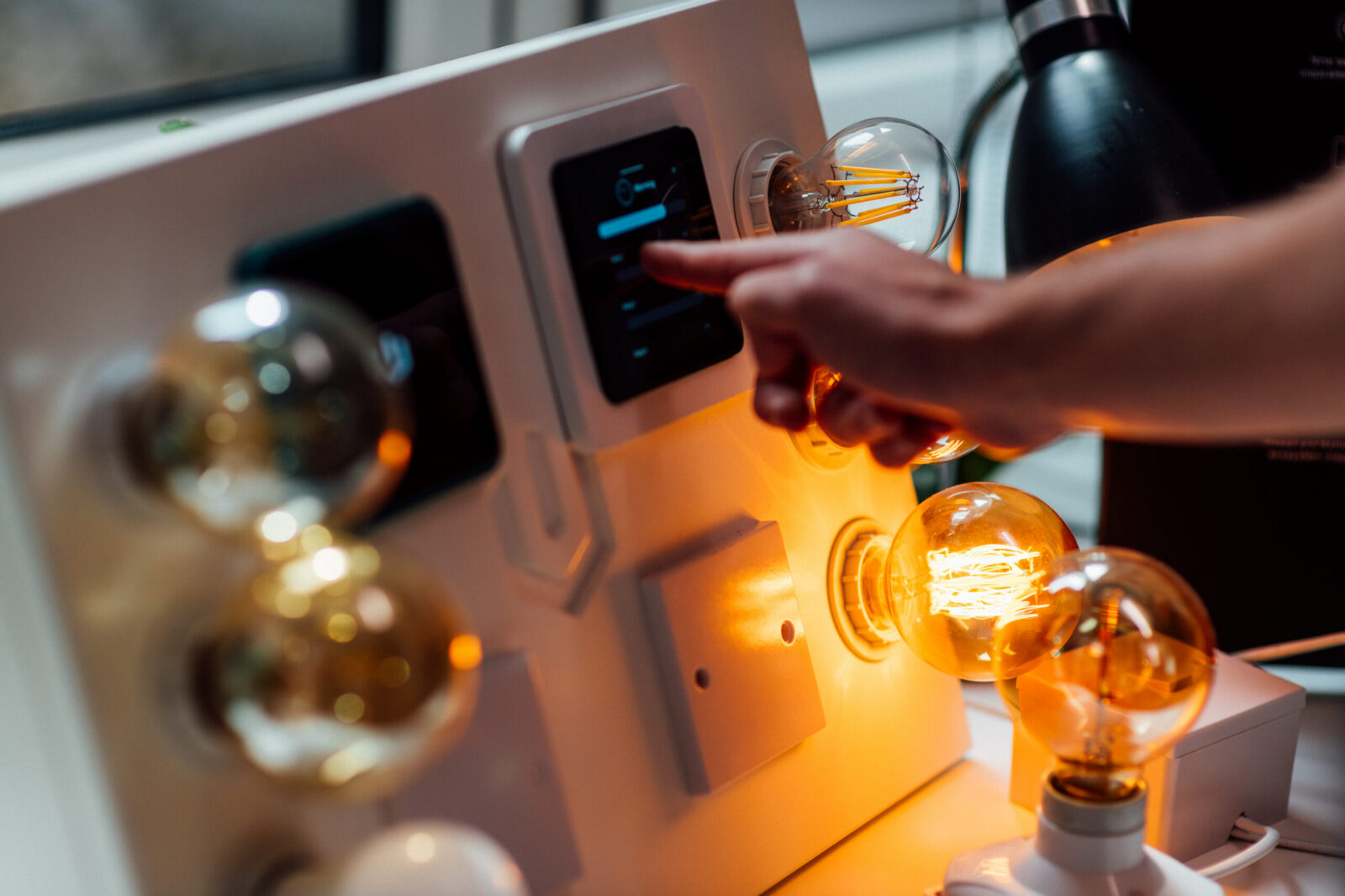
When we started Tewke, we did not set out to build a light switch. We set out to rethink how homes use energy, how they respond to the people living inside them, and how the spaces we inhabit might quietly work in our favour rather than against us.
Energy sits at the centre of modern life, yet inside the home it remains largely unmanaged, invisible and wasteful. We talk about generation, tariffs and supply, but rarely about behaviour, demand and optimisation. We obsess over what energy costs, but give far less thought to how it is actually used, room by room, minute by minute, habit by habit.
To me, the opportunity was obvious. If you want to change how a home behaves, you start with the interface people use every day. Not a thermostat buried in a cupboard, and not an app that gets opened once and forgotten. You start with the switch on the wall, the device every person in the household interacts with instinctively, often dozens of times a day.
That insight became Tap.
Building software is hard. Building hardware is harder. Building both together into a single, elegant and reliable device is something else entirely. Hardware demands patience, precision and capital. Every millimetre matters. Every material choice affects durability, thermal performance and cost. Component selection brings supply chain complexity and long lead times. Making a mistake in a decision can set you back months rather than minutes.
Software lives at the other extreme. It evolves weekly, improves continuously and rewards iteration. It is never finished.
Bringing these worlds together into a product that installs in minutes, works in the vast majority of homes and improves over time has been one of the most technically demanding undertakings of my career. It is also what makes the opportunity so compelling. When hardware and software truly integrate, you do not create a gadget. You create a platform.
During this journey, I have also been building a new home. It is an unusual project by any measure, the first new castle built in Britain in more than a century, blending traditional craftsmanship with future ready design. While its architecture looks to the past, its systems look firmly forward.
The castle has become a real world laboratory for what the future of living might look like. More than fifty Tap devices are installed throughout the building, learning patterns of use, managing lighting, measuring environmental conditions and providing insight into how the house actually performs. The property integrates advanced heating systems, renewable energy infrastructure and intelligent control layers, not as theoretical features but as lived experience.
Living inside this environment changes how you think about buildings. Comfort becomes more consistent. Energy waste becomes visible. Air quality, temperature and humidity become part of a broader understanding of wellbeing. You begin to see the home not as a static structure but as a responsive system.
The castle is not a prototype. It is a home. That distinction matters, because the goal is not futuristic novelty, but everyday practicality. What works here must work everywhere.
Tap began with lighting, but lighting is only the doorway. What we are building is the operating layer for the modern home, a system that fuses AI with energy optimisation and provides the foundation for a more intelligent living environment.
It is a platform that can support heating, security and assisted living. It learns behaviour and adapts automatically. It provides a unified intelligence layer rather than a collection of disconnected devices. This is not about adding more technology into the home. It is about making the home itself intelligent.
One of the more curious aspects of this journey is how often people struggle to see the scale of the opportunity. We are conditioned to think in categories: lighting systems, security systems, heating controls, smart speakers and energy apps. Entire industries have grown around fragmented solutions that each solve a narrow problem.
But homes are not fragmented. They are ecosystems.
Once you view the home as a unified system, the path forward becomes clearer. We could have built another energy supplier, and there would have been logic in doing so. My previous business operated within an established model and executed well inside it. This feels different. This feels like stepping outside the model entirely.
What excites me is the possibility of delivering the intelligence layer that sits above everything.
Building hardware requires capital. There is no avoiding that reality. Fundraising has been one of the most time-consuming aspects of this journey. It can be distracting and at times, exhausting, but it also forces clarity. You must articulate why what you are building matters, demonstrate progress and remain accountable to people who believe in your vision. External accountability sharpens execution.
Bootstrapping, meanwhile, teaches focus. When resources are constrained, you make harder decisions. You prioritise ruthlessly. You cannot simply throw money at problems. You learn where effort truly creates value and where it does not. That discipline has shaped Tewke. It has made us more deliberate, more efficient and more resilient.
Over the past year, something has shifted. We are no longer describing the opportunity in theory. We are seeing it installed in homes. We are seeing real energy data. We are seeing behavioural change. We are seeing savings. We are seeing demand.
Momentum is building. With funding secured, manufacturing scaling and sales underway, the opportunity is no longer abstract. It is tangible. We can see it. We can touch it. Increasingly, we can scale it beyond the UK and into international markets where the same inefficiencies and opportunities exist.
The future of the home is not more gadgets. It is intelligence. Homes that understand how they are used. Homes that optimise energy automatically. Homes that support comfort, safety and wellbeing. Homes that adapt and improve over time.
We are still at the beginning, but the path ahead is clearer than ever. What began as a rethink of the light switch is becoming something far more powerful: an operating layer for the home, an intelligence layer for energy and a platform for better living.
And the most exciting part is that we are only just getting started.
Leave a Reply